Dakesh
Dakesh translates complex legal regulations into clear, actionable guidance, enabling entrepreneurs to remain compliant while confidently building sustainable, scalable businesses.


Introduction
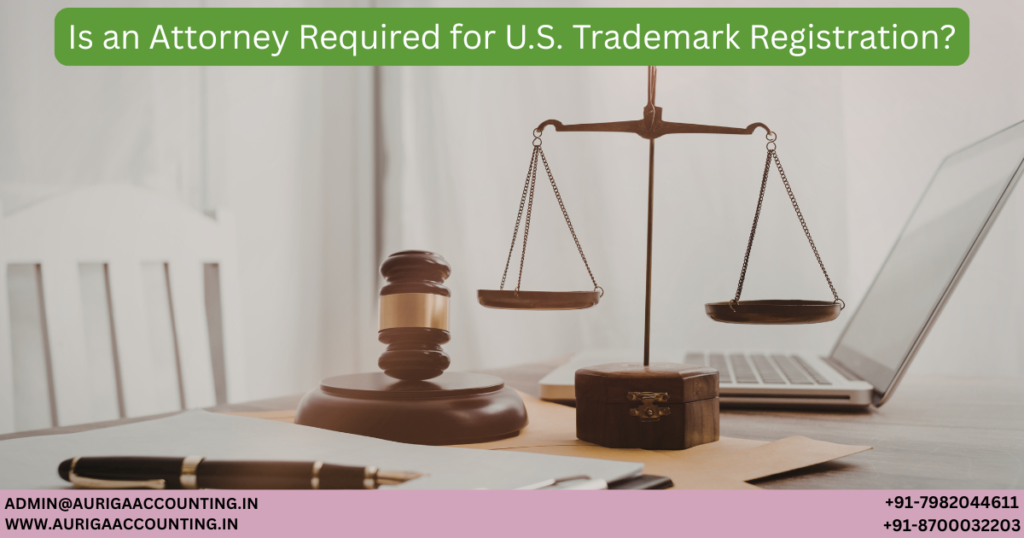
ToggleTrademarks are valuable business assets that distinguish a company’s goods or services from those of competitors while building brand recognition and customer loyalty. As entrepreneurs and businesses work to protect their intellectual property and strengthen their market presence, a common question arises: “Do you need an attorney for U.S. trademark registration?” While hiring legal representation is not mandatory for every applicant, the U.S. trademark registration process can be complex. Understanding when and why professional legal assistance may be beneficial is essential to avoiding costly mistakes and delays. This article explores the topic in detail. The team at IndiaFilings provides expert guidance and end-to-end support for U.S. trademark registration at competitive rates.
Before determining whether a trademark attorney is required, it is important to understand the basics of U.S. trademark registration. A trademark is a distinctive word, symbol, phrase, design, or combination that identifies and distinguishes the source of goods or services. Registering a trademark with the United States Patent and Trademark Office (USPTO) provides significant legal protections, including nationwide exclusive rights to use the mark and the ability to prevent others from using similar marks that may cause consumer confusion.
The USPTO has specific rules regarding legal representation in trademark matters:
Domicile Address Requirement: All applicants and registrants must provide a current domicile address in their trademark filings. This helps the USPTO determine whether a U.S.-licensed attorney is required.
Foreign-Domiciled Applicants: If your domicile is outside the United States, you must be represented by a U.S.-licensed trademark attorney. This ensures compliance with U.S. laws and USPTO regulations.
U.S.-Domiciled Applicants: Applicants domiciled within the United States are not required to hire an attorney. However, they must be prepared to manage the registration process and respond to legal matters independently.
The Role of a Trademark Attorney
A trademark attorney is a legal professional specializing in intellectual property law. Their role includes providing legal advice, conducting comprehensive trademark searches, preparing and filing applications, responding to USPTO Office Actions, and representing clients in disputes or proceedings before the USPTO or the Trademark Trial and Appeal Board (TTAB).
No, hiring a trademark attorney is not mandatory for U.S.-based applicants. Individuals and businesses may file trademark applications on their own, a process known as pro se representation. This option may appeal to applicants seeking to reduce upfront costs or take a do-it-yourself approach.
Although optional for U.S.-domiciled applicants, there are several strong reasons to work with a trademark attorney:
Legal Expertise: Trademark law is complex, and attorneys bring specialized knowledge to ensure compliance with legal requirements.
Comprehensive Trademark Searches: Attorneys have access to professional databases to identify potential conflicts and assess registrability.
Accurate Application Preparation: From selecting the correct filing basis to drafting precise goods and services descriptions, attorneys help minimize errors.
Handling USPTO Office Actions: If objections or refusals arise, an attorney can craft effective responses to overcome them.
Trademark Enforcement and Maintenance: Attorneys assist in maintaining trademark rights and enforcing them against infringement.
Dispute Representation: Legal representation is invaluable if disputes arise before the TTAB or in litigation.
Fraud Protection: Attorneys help identify and avoid misleading solicitations that often target trademark applicants.
Trademark registration costs and complexities often highlight the difference between handling the process independently and working with a legal professional.
Common Pitfalls of DIY Trademark Registration
While filing independently may seem cost-effective, it often leads to avoidable mistakes, including:
Incorrect Filing Basis: Choosing the wrong basis—such as “use in commerce” instead of “intent to use”—can weaken legal protection.
Improper Specimens: Submitting incorrect or unacceptable specimens can result in refusals.
Classification Errors: Selecting the wrong trademark class or inaccurately listing goods or services may lead to rejection.
Correcting these errors later can be more costly than obtaining professional guidance from the outset.
Cost Considerations When Hiring an Attorney
Although hiring a trademark attorney involves additional upfront costs, the long-term benefits often outweigh the expense. A skilled attorney can:
Improve the likelihood of successful registration
Prevent costly mistakes and delays
Address legal challenges efficiently
Protect your trademark rights more effectively over time
For applicants concerned about affordability, the USPTO also offers access to free and reduced-cost legal resources, making professional trademark assistance more accessible.
Dakesh
Dakesh translates complex legal regulations into clear, actionable guidance, enabling entrepreneurs to remain compliant while confidently building sustainable, scalable businesses.





Auriga provide expert services which can get your new business off to a flying start. We are Compliance for your business. Here you get simple and affordable online company registration and range of essential services. A world class technology – driven platform, offering end to end service from startup to well established firm.
By continuing past this page, you agree to our Terms of Service,Cookie Policy,Privacy Policy,Refund Policy and Content Policies.
© AURIGA ACCOUNTING PRIVATE LIMITED | 2021 | All Rights Reserved