Ravi
Ravi breaks down complex legal requirements into simple, actionable steps, helping entrepreneurs remain compliant and grow sustainable businesses with confidence.


Introduction
ToggleAre you moving goods within a state or across state borders? Under the GST framework, an E-Way Bill must be generated when the value of goods crosses the prescribed threshold. For business owners, suppliers, and transporters, understanding these limits is essential to stay compliant. This comprehensive guide provides a state-wise overview of E-Way Bill thresholds, distance-based validity periods, major exemptions, and expert insights to help ensure smooth, compliant, and penalty-free movement of goods across India.
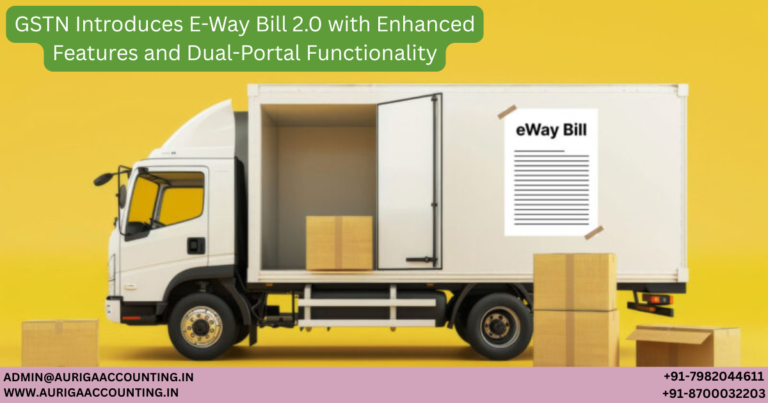
The E-Way Bill limit under GST refers to the minimum consignment value beyond which generating an E-Way Bill becomes mandatory for the transportation of goods by road. When a registered taxpayer or transporter moves goods valued above ₹50,000, an E-Way Bill must be generated—whether the movement is interstate or intra-state.
This requirement was implemented for interstate movement from 1st April 2018. For intra-state movement, individual states were allowed to prescribe their own threshold limits and implementation timelines. While the ₹50,000 limit is uniform for interstate transport, intra-state limits vary across states, typically ranging between ₹50,000 and ₹2,00,000.
The validity of an E-Way Bill depends on the distance the goods are transported:
Up to 200 km: Valid for 1 day
Every additional 200 km or part thereof: 1 extra day
Example:
If goods travel 450 km, the E-Way Bill will be valid for 3 days.
Additionally:
In many states, no E-Way Bill is required for movement within 10 km, such as movement within the same city or to a transporter’s warehouse.
If an E-Way Bill is generated but not used, it must be cancelled within 24 hours to avoid compliance issues.
Below is a summary of E-Way Bill limits prescribed by various states for intra-state movement. For interstate movement, the ₹50,000 threshold generally applies unless exempted.
Maharashtra
Intra-state: ₹1,00,000
Interstate: ₹50,000
Certain goods are exempt within the state
Notification: No. 15E, dated 29 June 2018
Rajasthan
Within the same city: ₹2,00,000 (excluding goods like tobacco, wood, iron, and steel)
Between cities: ₹1,00,000
Interstate: ₹50,000
Notification: GST Notification 02/2022, dated 24 Feb 2022
Delhi
Intra-state: ₹1,00,000
Interstate: ₹50,000
Notification: No. 03, dated 15 June 2018
West Bengal
Intra-state: ₹50,000 (effective from 1 Dec 2023)
Interstate: ₹50,000
Notification: No. 2/2023, dated 10 Nov 2023
Tamil Nadu
Intra-state: ₹1,00,000 (with specific exemptions)
Interstate: ₹50,000
Notification: No. 09, dated 31 May 2018
Bihar
Intra-state: ₹1,00,000
Interstate: ₹50,000
Notification: S.O. 14, dated 14 Jan 2019
Gujarat
Intra-state: ₹50,000 (with exemptions for goods like fabric, garments, hank yarn)
Inter-city movement: Exempt
Interstate: ₹50,000
Notification: GSL/GST/RULE-138(14)/B.19, dated 19 Sept 2018
Haryana
Intra-state & Interstate: ₹50,000 for all taxable goods
Notification: No. 49/ST-2, dated 19 Apr 2018
Jharkhand
Intra-state: ₹1,00,000 (except notified goods)
Interstate: ₹50,000
Notification: S.O. 66, dated 26 Sept 2018
The following table highlights the E-Way Bill threshold limits applicable across various states and union territories, along with the corresponding government notifications. Unless otherwise specified, the standard threshold of ₹50,000 applies.
| Sr. No. | State / UT | E-Way Bill Threshold Limit | Relevant Notification |
|---|---|---|---|
| 1 | Andhra Pradesh | ₹50,000 for all taxable goods | CCTs Ref. in CCW/GST/74/2015, dated 11 April 2018 |
| 2 | Arunachal Pradesh | ₹50,000 for all taxable goods | Notification No. 14/2018-State Tax, dated 23 March 2018 |
| 3 | Assam | ₹50,000 for all goods | Notification No. 30/2019-GST, dated 16 December 2019 |
| 4 | Chhattisgarh | ₹50,000 for 15 specified goods only | Notification No. F-10-31/2018/CT/V(46), dated 19 June 2018 |
| 5 | Goa | ₹50,000 applicable only to 22 specified goods | Notification No. CCT/26-2/2018-19/36, dated 28 May 2018 |
| 6 | Himachal Pradesh | ₹50,000 for all taxable goods | Notification No. 12-4/78-EXN-TAX-17408, dated 31 May 2018 |
| 7 | Jammu & Kashmir | ₹50,000 for interstate movement only; intra-state exempt | Notification No. 64, dated 30 November 2019 |
| 8 | Karnataka | ₹50,000 for all taxable goods | Notification No. FD 47 CSL 2017, dated 23 March 2018 |
| 9 | Kerala | ₹50,000 for interstate movement; special rules for intra-state gold | Notification Nos. 3/2018, 9/2018; GSTN Advisory dated 24 January 2025 |
| 10 | Madhya Pradesh | ₹1,00,000 for most goods; lower limits for certain items | Notification No. FA3-08/2018/1/V(18), dated 23 March 2022 |
| 11 | Manipur | ₹50,000 for all goods | CBIC Press Release dated 24 May 2018 |
| 12 | Meghalaya | ₹50,000 for all goods | Notification No. ERTS (T) 84/2017/20, dated 20 April 2018 |
| 13 | Mizoram | ₹50,000 for all goods | Notification No. J.21011/2(iii)/2018-TAX/Pt, dated 2 July 2018 |
| 14 | Nagaland | ₹50,000 for all goods | Notification No. 6/2018, dated 19 April 2018 |
| 15 | Odisha | ₹50,000 for all goods | Press Release dated 31 May 2018 |
| 16 | Puducherry | ₹50,000 for all goods | Notification No. F. No. 3240/CTD/GST/2018/3, dated 24 April 2018 |
| 17 | Punjab | ₹1,00,000 for intra-state; ₹50,000 for interstate | Notification No. PA/ETC/2018/175, dated 13 September 2018 |
| 18 | Sikkim | ₹50,000 for all goods | Press Release dated 23 April 2018 |
| 19 | Telangana | ₹50,000 for all goods | Press Release dated 10 April 2018 |
| 20 | Tripura | ₹50,000 for all goods | Notification No. F.1-11(91)-TAX/GST/2018 (Part-I), dated 17 April 2018 |
| 21 | Uttar Pradesh | ₹50,000 for all goods | Notification No. 38, dated 11 April 2018 |
| 22 | Uttarakhand | ₹50,000 for all goods | Notification No. 239/CSTUK/GST-Vidhi/2018-19, dated 17 April 2018 |
An E-Way Bill is a key compliance document under the Goods and Services Tax (GST) system, designed to monitor the movement of goods across India. Generating an E-Way Bill is mandatory in the following situations:
General Conditions for Generating an E-Way Bill
An E-Way Bill must be generated when the value of goods exceeds ₹50,000 (inclusive of GST) under a single invoice or delivery challan.
For interstate movement (between two states or union territories), an E-Way Bill is compulsory irrespective of the consignment value, unless the goods fall under specific exemptions.
For intra-state movement (within the same state), an E-Way Bill is required only if the respective state has prescribed a threshold limit. While most states follow the ₹50,000 limit, some states have different thresholds.
Non-Sale Transactions Requiring an E-Way Bill
Even in the absence of a sale, an E-Way Bill is mandatory for the movement of goods in the following cases:
Job work: Sending goods to a job worker or receiving them back
Stock transfers: Movement between branches, warehouses, or godowns
Return of goods: From customers back to the seller
Exhibitions, fairs, or events: Temporary movement for display or promotional purposes
Goods sent for testing, repair, or servicing
Modes of Transport Covered
E-Way Bill provisions apply to all modes of transportation, including:
Road
Rail
Air
Ship or vessel
An E-Way Bill is not mandatory in certain cases, even if the consignment value exceeds the standard threshold, such as:
Transport of exempted goods, including:
Fresh fruits and vegetables
Unprocessed grains or cereals
Milk, eggs, and unprocessed meat
Movement through non-motorised transport, such as handcarts or bullock carts
Goods transported under a customs bond, or to and from:
Inland Container Depots (ICDs)
Container Freight Stations (CFS)
Ports and Special Economic Zones (SEZs)
Transport of empty cargo containers or gas cylinders
Movement within notified municipal limits, where states have specifically exempted E-Way Bill generation
To stay updated on the applicable E-Way Bill threshold in your state:
Visit the Official E-Way Bill Portal
Navigate to the Help section and select Notifications
Choose your state to view the latest intra-state E-Way Bill requirements
Alternatively, you may:
Visit your State GST Department’s website
Consult a GST professional or tax advisor
Being aware of state-specific E-Way Bill rules helps businesses:
Maintain regulatory compliance and avoid penalties
Prevent shipment delays caused by documentation issues
Reduce the risk of vehicle detention and unnecessary scrutiny
Improve operational efficiency and logistics planning
Avoid redundant compliance, especially for multi-state operations
Use automated invoicing and accounting software that dynamically applies GST rules and state-wise E-Way Bill thresholds. This minimizes manual errors and ensures accurate documentation during dispatch.
The experts at Auriga Accounting pvt. ltd. can help you manage GST and E-Way Bill compliance effortlessly. You can also streamline your accounting and invoicing with LEDGERS, an advanced solution that automatically adapts to GST regulations and state-wise E-Way Bill thresholds—saving time while reducing compliance risks.
Ravi
Ravi breaks down complex legal requirements into simple, actionable steps, helping entrepreneurs remain compliant and grow sustainable businesses with confidence.

Auriga provide expert services which can get your new business off to a flying start. We are Compliance for your business. Here you get simple and affordable online company registration and range of essential services. A world class technology – driven platform, offering end to end service from startup to well established firm.
By continuing past this page, you agree to our Terms of Service,Cookie Policy,Privacy Policy,Refund Policy and Content Policies.
© AURIGA ACCOUNTING PRIVATE LIMITED | 2021 | All Rights Reserved