Ravi
Ravi breaks down intricate legal rules into practical steps, helping entrepreneurs stay compliant and grow sustainable businesses.


Introduction
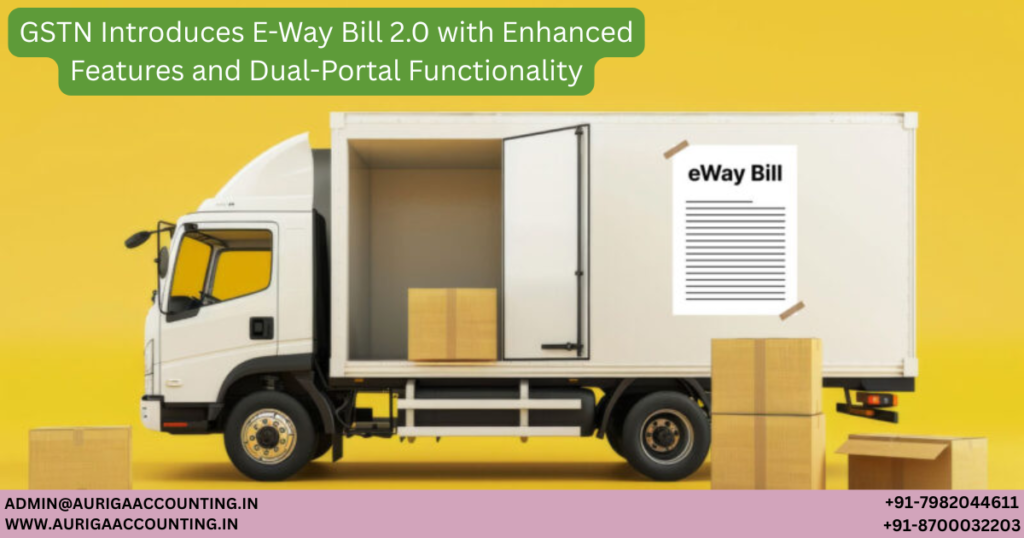
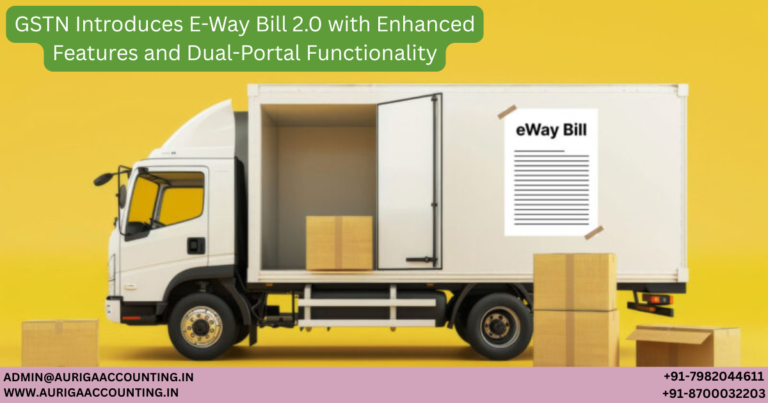
ToggleThe Goods and Services Tax Network (GSTN) has officially announced the launch of the E-Way Bill 2.0 portal, set to go live on 1 July 2025 at https://ewaybill2.gst.gov.in/. Developed by the National Informatics Centre (NIC), this next-generation platform introduces upgraded features and full interoperability with the existing E-Way Bill 1.0 portal.
The dual-portal framework ensures uninterrupted access to E-Way Bill services, enhances operational continuity, and efficiently handles high-demand scenarios.
The new portal addresses increasing demand from businesses for a robust, resilient system that functions seamlessly during emergencies, peak traffic, or technical downtime. Users can now perform critical E-Way Bill functions on either portal, eliminating dependency on a single system and enabling cross-platform access for taxpayers, transporters, and logistics operators.
1. Cross-Portal Functionalities
All core E-Way Bill tasks are interoperable across both portals:
Generate E-Way Bills (Part-A)
Generate Consolidated E-Way Bills
Extend validity periods
Update transporter details
Retrieve and print E-Way Bills
2. Real-Time Data Synchronisation
Changes made on one portal are instantly reflected on the other, ensuring data consistency and smooth business operations.
3. Dual-System Architecture
Both portals operate in tandem, reducing downtime risks and allowing users to switch between portals during emergencies without losing functionality.
4. API Accessibility
All portal services are available via APIs—currently in a sandbox environment for testing and moving to production at launch. APIs enable automation for ERP systems, logistics platforms, and high-volume tax filers.
Enhanced Redundancy: Continue operations if one portal faces technical issues.
Stability During Peak Periods: Load distribution between portals reduces congestion.
Legal Validity of Dual Slips: E-Way Bills generated on either portal are enforceable by authorities.
Operational Flexibility: Choose the portal that is most accessible without functionality limitations.
The portal integrates with broader GST compliance initiatives:
Data Flow Integration: Consistent E-Way Bill data in GSTR-1 and GSTR-3B returns.
API-based Automation: Automate E-Way Bill generation from ERP systems.
E-Invoicing Alignment: Link e-invoices directly to E-Way Bills for faster processing.
Businesses not yet registered under GST must complete registration to access E-Way Bill services.
High Availability Servers to handle heavy loads and minimize downtime.
Encrypted Data Transmission to protect sensitive information.
User Access Controls with multi-factor authentication.
Role-Based Dashboards to manage access for accounts, logistics, and operations.
Both portals mirror data in real-time, ensuring minimal latency.
Operational continuity is maintained during downtimes.
Legal validity is preserved for E-Way Bills generated on either portal.
Available APIs support:
E-Way Bill generation and updates
Validity extension
Shipment consolidation
Transporter and vehicle updates
Ideal for ERP developers, logistics platforms, and high-volume filers, APIs help automate workflows and reduce manual intervention.
| Feature | Benefit |
|---|---|
| Dual Access | Use either portal without losing functionality |
| Failover Protection | Continue operations if one portal goes down |
| Real-Time Sync | Instant updates and mirrored records |
| API Access | Automate EWB creation and tracking |
| Faster Updates | Improved compliance timelines |
| Data Consolidation | Seamless merging across portals |
This dual-portal system reduces reliance on technical support and prevents delays in goods movement.
Log in using existing GST credentials.
Test E-Way Bill generation, updates, and extensions.
Test API integration for automated systems.
Train teams to use both portals interchangeably.
Important: A valid GST registration is required to access E-Way Bill portals. Businesses not yet registered must apply for GST registration to avail of EWB services.
Ravi
Ravi breaks down intricate legal rules into practical steps, helping entrepreneurs stay compliant and grow sustainable businesses.



Auriga provide expert services which can get your new business off to a flying start. We are Compliance for your business. Here you get simple and affordable online company registration and range of essential services. A world class technology – driven platform, offering end to end service from startup to well established firm.
By continuing past this page, you agree to our Terms of Service,Cookie Policy,Privacy Policy,Refund Policy and Content Policies.
© AURIGA ACCOUNTING PRIVATE LIMITED | 2021 | All Rights Reserved