Dakesh
Dakesh simplifies complex legal regulations into clear, actionable insights, empowering entrepreneurs to stay compliant and grow sustainable businesses with confidence.


Introduction
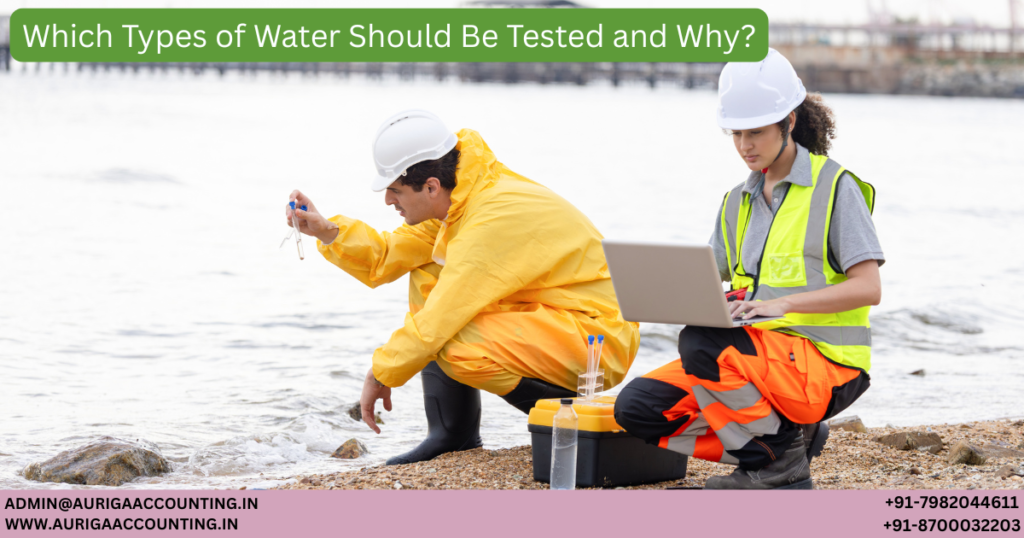
ToggleWater is vital for life, industry, agriculture, and the environment. However, not all water is safe or suitable for every purpose. Whether you are a homeowner, business operator, or government authority, water testing is essential to ensure safety, regulatory compliance, and long-term sustainability.
This article explains the different types of water that should be tested, why testing is necessary, and the key parameters used in water quality analysis. By the end, you’ll gain a comprehensive understanding of how water testing supports public health, manufacturing, agriculture, environmental protection, and food safety.
Before exploring the various water types that require testing, it’s important to understand the purpose behind water quality analysis.
1. Human Health and Safety
Contaminated water may contain harmful bacteria, viruses, heavy metals, and chemical pollutants. These contaminants can cause serious waterborne diseases such as cholera, dysentery, and hepatitis A, along with long-term health complications.
2. Regulatory Compliance
Industries such as food processing, pharmaceuticals, and chemicals must meet water quality standards prescribed by authorities like FSSAI, BIS, CPCB, EPA, and WHO. Regular testing helps ensure ongoing compliance and avoids penalties.
3. Environmental Protection
Unchecked water pollution can damage ecosystems, harm aquatic life, and degrade soil quality. Routine monitoring of water sources plays a critical role in maintaining environmental balance.
4. Process Efficiency and Product Quality
In sectors such as textiles, electronics, and food manufacturing, water quality directly impacts product consistency and equipment lifespan. Poor-quality water can lead to corrosion, scaling, contamination, and operational inefficiencies.
Also read: FSSAI Compliance – Water Testing Requirements for Food Businesses in India
1. Drinking Water (Potable Water)
What is it?
Water intended for human consumption, supplied through municipal systems or private sources like wells and borewells.
Why test it?
To ensure it meets safety standards for physical, chemical, and microbiological parameters.
Common Tests:
pH
Total Dissolved Solids (TDS)
E. coli and Total Coliforms
Heavy metals (lead, arsenic, mercury)
Nitrates, fluoride, pesticides
Testing Frequency:
Monthly for public supplies; at least once a year for private sources.
2. Raw Water (Source Water)
What is it?
Water collected directly from natural sources such as rivers, lakes, reservoirs, and aquifers.
Why test it?
To determine the treatment methods required before the water is used or supplied.
Common Tests:
Turbidity
BOD and COD
Suspended solids
Heavy metals
Pathogens
3. Process Water (Industrial Use)
What is it?
Water used in industrial operations such as manufacturing, cooling, washing, and heating.
Why test it?
To prevent corrosion, scaling, and contamination that can affect machinery and product quality.
Common Tests:
pH and alkalinity
Hardness
Chloride and conductivity
Silica
Microbial analysis (food and pharma industries)
4. Boiler Feed Water
What is it?
Water supplied to boilers for steam and heat generation.
Why test it?
Impurities can cause scaling, corrosion, and system failures.
Common Tests:
Hardness
pH
Silica
TDS
Dissolved oxygen
Phosphates
5. Cooling Tower Water
What is it?
Water used in cooling systems for buildings and industrial equipment.
Why test it?
To control scaling, corrosion, and microbial growth such as Legionella.
Common Tests:
pH and alkalinity
TDS
Hardness
Bacterial count
Corrosion inhibitors
6. Wastewater (Effluent/Discharge Water)
What is it?
Used water discharged from residential, commercial, or industrial activities.
Why test it?
To ensure safe disposal or reuse and comply with environmental regulations.
Common Tests:
BOD and COD
Suspended solids
Oil and grease
Ammonia and nitrogen
Heavy metals
Pathogens
Applicable Standards:
CPCB, SPCB, and EPA effluent discharge norms.
7. Packaged Drinking Water
What is it?
Bottled or packaged water sold for consumption.
Why test it?
To comply with FSSAI and BIS IS 14543 standards.
Common Tests:
Microbiological safety (absence of E. coli and Salmonella)
Chemical parameters
pH, TDS, turbidity
Residual chlorine and pesticides
8. Swimming Pool Water
What is it?
Water used in residential and commercial swimming pools.
Why test it?
To prevent skin, eye, and gastrointestinal infections and maintain disinfectant effectiveness.
Common Tests:
Free and total chlorine
pH
Alkalinity
Cyanuric acid
Microbial analysis
9. Rainwater
What is it?
Water harvested from rainfall for reuse or groundwater recharge.
Why test it?
To ensure it is free from contaminants collected from rooftops, storage systems, or air pollution.
Common Tests:
pH
TDS
Turbidity
Microbial contamination
Heavy metals (especially near industrial areas)
10. Agricultural (Irrigation) Water
What is it?
Water used for crop irrigation.
Why test it?
To protect crops, soil health, and food safety.
Common Tests:
pH and salinity
Nutrients (nitrate, phosphate)
Heavy metals
Pesticide residues
Pathogens
| Category | Parameters |
|---|---|
| Physical | Color, odor, taste, turbidity, temperature |
| Chemical | pH, TDS, hardness, chloride, sulfates, fluoride, nitrates, metals |
| Biological | Total coliforms, fecal coliforms, E. coli |
| Radiological | Radon, uranium (in specific regions) |
Homeowners using borewells or rainwater systems
Food and beverage manufacturers
Pharmaceutical companies
Hospitals and clinics
Agricultural producers
Schools, hotels, and hostels
Packaged drinking water plants
Industrial units and municipalities
| Water Type | Frequency |
|---|---|
| Drinking water (private) | Every 6–12 months |
| Industrial process water | Monthly or as required |
| Wastewater / effluents | Weekly or as per norms |
| Packaged drinking water | Per batch or daily |
| Swimming pools | Daily to weekly |
| Irrigation water | Seasonal or quarterly |
Dakesh
Dakesh simplifies complex legal regulations into clear, actionable insights, empowering entrepreneurs to stay compliant and grow sustainable businesses with confidence.