


Shivani is an expert content writer with a specialization in business registration, tax laws, trademark regulations, and corporate compliance. His well-researched articles offer practical, easy-to-understand guidance that helps businesses navigate complex legal and regulatory landscapes with confidence.
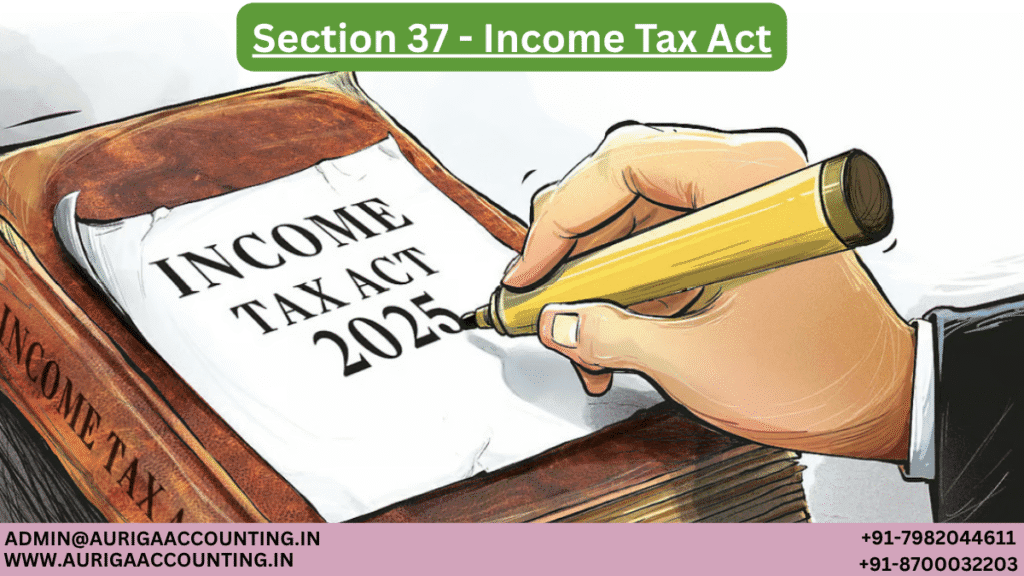
Section 37 - Income Tax Act
Introduction
ToggleSection 37 of the Income Tax Act is a key provision in India’s tax system that allows companies and professionals to claim deductions for expenses incurred wholly and exclusively for business or professional purposes. Introduced under the Income Tax Act of 1961, this section supports business growth by permitting deductions on certain qualifying expenses. Understanding Section 37 is crucial for accurate tax computation and compliance, helping taxpayers maximize eligible deductions while adhering to Indian tax laws. This article offers a comprehensive overview of Section 37. Let IndiaFilings guide you through the complexities of income tax deductions and ensure your ITR filing is accurate and on time.
What is Section 37 of the Income Tax Act?
Section 37 of the Income Tax Act allows businesses to deduct expenses that are incurred exclusively for their operations, as long as these expenses are neither personal nor capital in nature. This includes necessary operational costs such as office rent, advertising, legal fees, and repairs, provided they directly relate to the business. By permitting these deductions, Section 37 helps reduce taxable income and thereby lowers tax liability. This encourages businesses to reinvest their savings into growth, making Section 37 an important tool for effective tax planning and financial management.
Conditions for Claiming Deductions Under Section 37
To claim deductions under Section 37, the following conditions must be met:
Exclusion of Personal or Capital Expenses: Only expenses related to business operations qualify. Personal expenses or capital investments are not deductible.
Not Covered by Other Sections: The expense should not be deductible under other sections of the Income Tax Act (Sections 30 to 36), which deal with specific items like rent, repairs, insurance, or depreciation.
Legal and Ethical Compliance: Expenses linked to illegal or prohibited activities are not allowed.
Wholly and Exclusively for Business: The expenditure must be incurred solely for business or professional purposes.
Pertains to Relevant Financial Year: Only expenses paid or accrued during the relevant financial year are eligible
Expenses Allowed for Deduction Under Section 37
Section 37 permits deductions for various business expenses, including:
Interest on Business Loans: Interest paid on loans for business purposes (excluding loans for capital expenditure).
Legal Fees: Payments to lawyers, advocates, and solicitors for business-related legal services.
Advertising Costs: Expenses for business advertisements (excluding political ads).
Employee Salaries: Salaries paid to employees and compensation on termination. Salaries to partners may qualify under specific conditions, but payments to proprietors do not.
Loan Raising Costs: Charges like registration fees, stamp duty, and brokerage related to obtaining business loans.
Penalty Payments:
Non-deductible if related to legal violations.
Deductible if compensatory under contract obligations.
Other Allowable Expenses: Fees to the registrar of companies for compliance, employee welfare, festival expenses, bonuses and gifts (excluding perks), telephone expenses, and professional fees
Expenses Not Allowed for Deduction Under Section 37
Certain expenses are excluded from deductions because they are capital in nature, unrelated to normal business operations, or against public policy:
Fees to Registrar of Companies for altering company constitution (Articles of Association or Memorandum).
Costs for acquiring vacant land possession.
Fees for increasing authorized capital.
Payments to secure tenancy rights on property.
Bank guarantee commissions for loans to buy fixed assets.
Penalties for legal violations.
Demolition costs for new construction.
Expenses to relocate the registered office.
Sales tax payments on goods transactions
How to Claim Tax Deductions Under Section 37
Follow these steps to claim deductions:
Check Eligibility: Confirm that your expenses qualify under Section 37.
Maintain Documentation: Keep invoices, receipts, and payment proofs to support your claims.
Choose the Correct ITR Form:
ITR-3 for individuals in business or profession.
ITR-5 for firms or LLPs.
ITR-6 for companies.
Report Expenses: Enter eligible expenses in the ‘Profit and Gains from Business or Profession’ section of the ITR form, specifying Section 37 deductions.
Ensure Accurate Accounting: Reflect these expenses properly in your profit and loss statement.
File on Time: Submit the ITR before the deadline, ensuring accuracy to avoid issues during tax assessments
About the Author
shivani
April 5, 2026
new
January 10, 2026
January 8, 2026
January 8, 2026
January 8, 2026
January 7, 2026
January 7, 2026
January 7, 2026
January 7, 2026
January 7, 2026
January 7, 2026
January 7, 2026
January 6, 2026
December 31, 2025
December 31, 2025
December 29, 2025
December 29, 2025
December 27, 2025
December 26, 2025
December 26, 2025
December 12, 2025
December 12, 2025
November 29, 2025
November 29, 2025
November 29, 2025
November 28, 2025
November 28, 2025
November 28, 2025
November 27, 2025
November 27, 2025
November 27, 2025
November 26, 2025
November 26, 2025
November 26, 2025
November 25, 2025
November 25, 2025
November 25, 2025
November 24, 2025
November 24, 2025
November 24, 2025
November 24, 2025
November 21, 2025
November 21, 2025
November 19, 2025
November 19, 2025
November 19, 2025
November 15, 2025
November 15, 2025
November 13, 2025
November 13, 2025
November 13, 2025
June 16, 2025
June 13, 2025
June 11, 2025
June 11, 2025
June 10, 2025
June 9, 2025
June 5, 2025
June 5, 2025
June 5, 2025
June 4, 2025
June 3, 2025
May 31, 2025
May 31, 2025
May 28, 2025
May 28, 2025
May 27, 2025
May 27, 2025
May 27, 2025
May 26, 2025
May 26, 2025
May 26, 2025
May 26, 2025
May 26, 2025
May 24, 2025
May 24, 2025
May 24, 2025
May 24, 2025
May 23, 2025
May 23, 2025
May 23, 2025
May 23, 2025
May 23, 2025
May 23, 2025
May 23, 2025
May 22, 2025
May 22, 2025
May 22, 2025
May 21, 2025
May 21, 2025
May 21, 2025
May 21, 2025
May 21, 2025
May 20, 2025
May 17, 2025
May 17, 2025
May 17, 2025
May 17, 2025
May 16, 2025
May 16, 2025
May 16, 2025
May 15, 2025
May 15, 2025
May 15, 2025
May 14, 2025
May 13, 2025
May 13, 2025
May 13, 2025
May 12, 2025
May 12, 2025
May 12, 2025
May 12, 2025
May 10, 2025
May 10, 2025
May 10, 2025
May 10, 2025
May 9, 2025
May 9, 2025
May 9, 2025
May 9, 2025
May 9, 2025
May 8, 2025
May 8, 2025
May 8, 2025
May 8, 2025
May 8, 2025
May 8, 2025
May 8, 2025
May 7, 2025
May 7, 2025
May 7, 2025
May 7, 2025
May 7, 2025
May 7, 2025
May 6, 2025
May 5, 2025
May 5, 2025
May 5, 2025
May 3, 2025
May 3, 2025
May 3, 2025
May 3, 2025
May 3, 2025
April 30, 2025
April 30, 2025
April 29, 2025
April 28, 2025
April 28, 2025
April 28, 2025
April 28, 2025
April 26, 2025
April 26, 2025
April 26, 2025
April 26, 2025
April 26, 2025
April 25, 2025
April 25, 2025
April 24, 2025
April 23, 2025
October 30, 2023
October 30, 2023
October 30, 2023
October 30, 2023
October 28, 2023
October 28, 2023
October 28, 2023
October 28, 2023
October 28, 2023
October 28, 2023
October 28, 2023
October 28, 2023
October 28, 2023
October 27, 2023
October 27, 2023
October 27, 2023
October 27, 2023
October 27, 2023
October 27, 2023
October 27, 2023
October 27, 2023
October 26, 2023
October 26, 2023
October 26, 2023
October 26, 2023
October 26, 2023
RELATED ARTICLES

Key Reasons...
Simple Tax-Saving...


Tax Saving...

Section 80GGA:...


Guide to Income...

How to Verify...

Handling Income...
No posts found
