Dakesh
Dakesh transforms complex legal regulations into clear, actionable insights, helping entrepreneurs remain compliant while building sustainable and scalable businesses.


Introduction
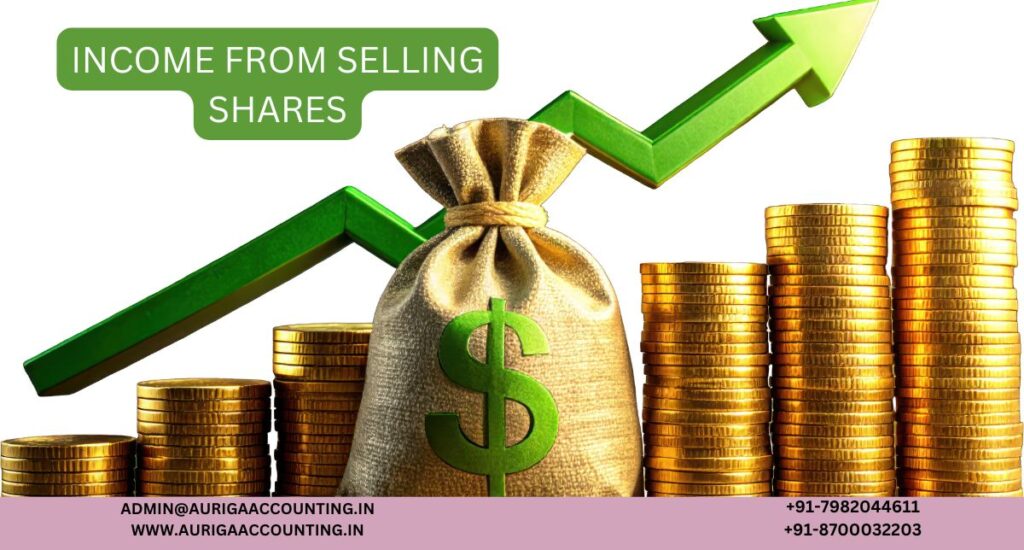
ToggleUnder the Income Tax Act, 1961, shares are classified as capital assets, and any income earned from their sale is taxed under the head “Capital Gains.” The tax treatment depends on whether the shares are listed or unlisted and the holding period.
For listed equity shares, they are considered long-term capital assets if held for more than 12 months. Long-term capital gains (LTCG) on listed shares are taxed at 12.5% without indexation benefit, after an exemption limit of ₹1.25 lakh per financial year. Short-term capital gains (STCG) on listed shares, where the holding period is 12 months or less, are taxed at 20% under Section 111A.
In the case of unlisted shares, they are treated as long-term capital assets if held for more than 24 months. LTCG on unlisted shares is also taxed at 12.5% without indexation. Short-term capital gains from unlisted shares are taxed as per the individual’s applicable income tax slab rates.
Understanding these rules helps taxpayers correctly report capital gains and ensure proper tax compliance on share trading income.
Under the head “Capital Gains,” income from the sale of shares is classified into two categories: long-term capital gains (LTCG) and short-term capital gains (STCG).
This classification is based on the holding period of the shares, which refers to the duration between the date of purchase (acquisition) and the date of sale or transfer. The tax treatment depends on how long the shares are held before being sold.
It is also important to note that the holding period rules differ for various types of investments such as listed equity shares, equity mutual funds, and debt mutual funds. As a result, their taxability and applicable capital gains rates also vary under the Income Tax Act.
Calculation of Short-Term Capital Gains (STCG)
Short-term capital gains are calculated using the following formula:
| Particulars | Amount (₹) |
|---|---|
| Sale Consideration | XXX |
| Less: Expenses related to transfer | (XXX) |
| Net Sale Consideration | XXX |
| Less: Cost of Acquisition | (XXX) |
| Less: Cost of Improvement | (XXX) |
| Capital Gains | XXX |
Example of Short-Term Capital Gain
In October 2024, Kuldeep Singh purchased 250 shares at ₹155 per share, totaling ₹38,750. He sold them after 5 months at ₹192 per share for ₹48,000.
Calculation:
| Particulars | Amount (₹) |
|---|---|
| Sale Consideration | 48,000 |
| Less: Brokerage | (240) |
| Net Sale Consideration | 47,760 |
| Less: Cost of Acquisition | (38,750) |
| Short-Term Capital Gain | 9,010 |
Listed Equity Shares – Long-Term Capital Gains (LTCG)
If listed equity shares are sold after a holding period of more than 12 months, the gain is treated as long-term capital gain (LTCG) or loss (LTCL).
A grandfathering clause applies to protect gains accrued before 31st January 2018 under earlier tax rules.
Grandfathering Clause Explained
The grandfathering rule allows earlier gains to be protected when tax laws change. For listed shares purchased before 31st January 2018, the fair market value (FMV) as of that date is considered for computing capital gains if it is more beneficial.
This ensures that gains accrued before the tax change are not unfairly taxed.
Other Equity Shares – Long-Term Capital Gains (LTCG)
For other equity shares (not listed), LTCG is taxed as follows:
Regardless of whether the capital gains arise from listed equity shares or other capital assets, exemption under Section 54F of the Income Tax Act can be claimed on a proportionate basis, subject to specified conditions.
This exemption is available when the net sale proceeds from the capital asset are reinvested in a residential property within the prescribed time limits. The benefit is intended to encourage investment in housing.
If the entire sale consideration is invested in purchasing or constructing a residential house, the full amount of long-term capital gains can be claimed as an exemption under Section 54F.
1. Short-Term Capital Loss (STCL)
A short-term capital loss arising from the sale of equity shares can be set off against both short-term capital gains and long-term capital gains from any capital asset. If the entire loss cannot be adjusted in the same financial year, it can be carried forward for up to eight assessment years and set off against future capital gains during that period.
To carry forward such losses, it is mandatory to file the income tax return within the due date. Even if your total income is below the taxable limit, timely filing is required to preserve the benefit of loss carry forward.
2. Long-Term Capital Loss (LTCL)
Long-term capital loss can be adjusted only against long-term capital gains; it cannot be set off against short-term capital gains. Any unadjusted LTCL can also be carried forward for up to eight assessment years to be set off against future long-term capital gains.
Dakesh
Dakesh transforms complex legal regulations into clear, actionable insights, helping entrepreneurs remain compliant while building sustainable and scalable businesses.